Mold Removal & Moisture Services in the Lake Keowee Area
Properties around Lake Keowee come with a different rhythm than a typical full-time residence. Many sit empty for stretches of time, get used seasonally, or change hands between family members throughout the year. That pattern makes it worth paying closer attention to moisture and mold concerns—not because problems are more common near the lake, but because they can go unnoticed longer when no one is there to catch them early.
Whether you own a lakefront home, a second residence you visit periodically, or manage a property on behalf of an owner, a professional evaluation can help clarify what is happening at that specific property.
Licensed & Insured.
Concerns That Can Go Unnoticed While a Property Sits Empty
In a home occupied every day, small changes are often noticed quickly—a new musty odor, a damp patch or unexpected condensation. A property used only occasionally or left closed between visits does not receive that same daily attention. A slow plumbing leak, a gap in a crawl-space vapor barrier or condensation in an unconditioned space can therefore continue undetected longer.
This does not mean these conditions happen more frequently around Lake Keowee. It is simply a practical difference in how seasonal and second-home properties may be used. An inspection may be appropriate when an owner notices a warning sign, returns after an extended absence and discovers a concern, or learns of a leak, water intrusion or HVAC problem that was not caught immediately.
Warning Signs Worth an Evaluation
- A musty or stale odor upon arrival, especially after the property has been closed
- Visible discoloration on walls, ceilings or around windows and door frames
- A crawl space that feels damp, smells musty or has standing water after rain
- A plumbing leak, roof issue or HVAC problem that was not addressed and dried promptly
- Noticeably more condensation or indoor humidity than during a previous visit
Mold Inspection and Testing
A mold inspection is a visual, moisture-focused walkthrough used to identify visible growth and possible moisture sources. Testing is a separate, more specific tool and is not something every property needs.
According to the EPA, when mold is already visible, sampling is usually unnecessary. Testing is generally considered when a qualified professional has a defined reason to collect a sample. There are no federal standards for an acceptable indoor concentration of mold or mold spores.
Mold Removal and Remediation
Remediation addresses both visible mold and the moisture source behind it. The work may include cleaning or removing affected materials, correcting the underlying moisture condition and reviewing the addressed area. The appropriate scope depends on what the evaluation finds at that specific property.
Crawl-Space Moisture
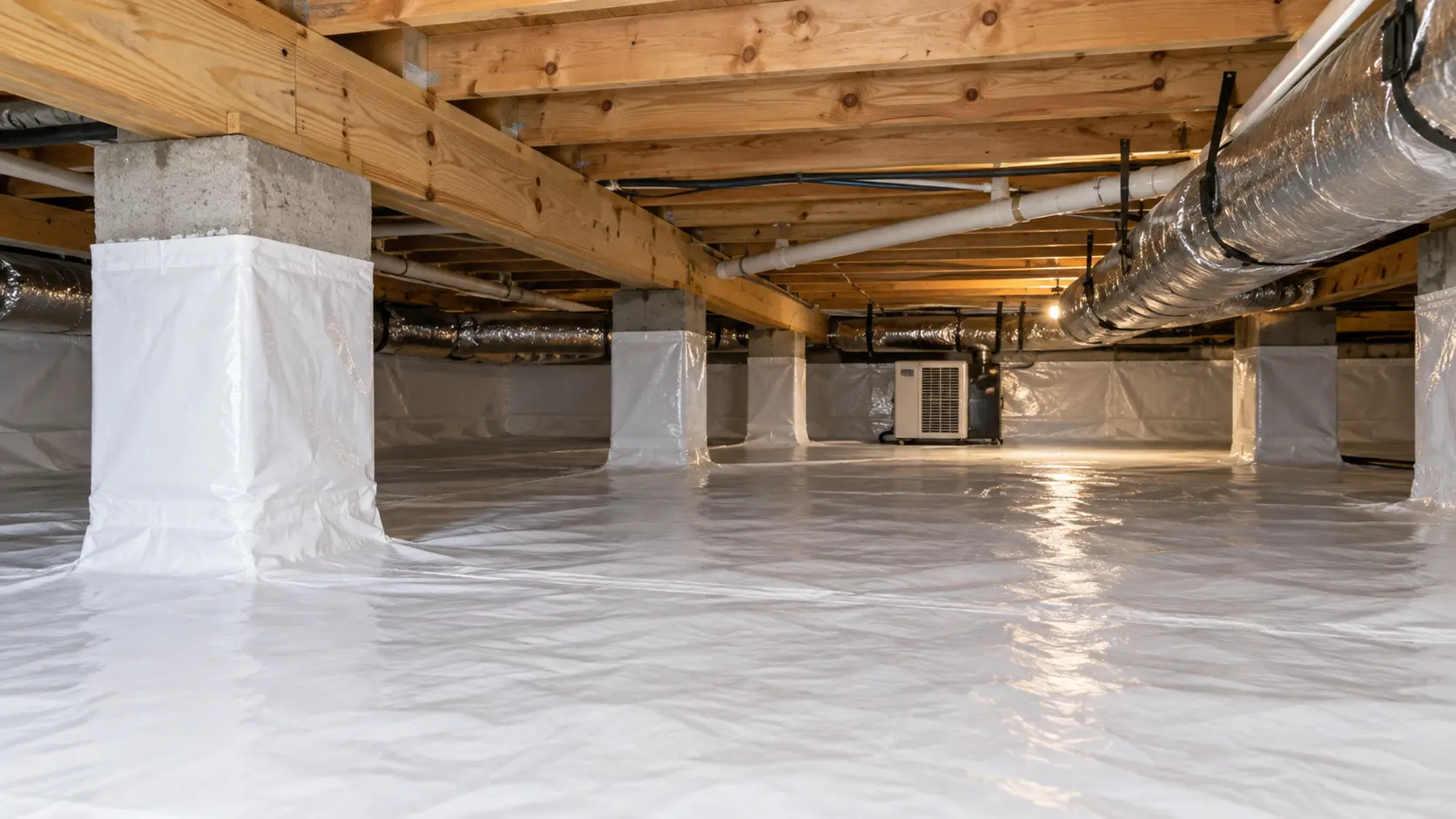
Crawl spaces are an important area to examine when a property has musty odors, damp materials, condensation or standing water. There is no single correction that applies to every crawl space. The appropriate approach depends on its design, surrounding drainage, ground moisture, plumbing, air sealing and humidity levels.
A vapor barrier or full encapsulation is not automatically the correct answer for every property. Some properties may require a more limited moisture correction.
What to Document If You Discover a Problem
If you notice a musty smell, visible discoloration or dampness when arriving at a property, note what you observed and when.
Helpful information may include:
- How long the property was unoccupied
- Whether there was recent heavy rain
- Whether a plumbing, roof or HVAC issue occurred
- The room or crawl-space area where the concern was found
- Whether the condition appears different from the previous visit
Providing these details when requesting an inspection may help explain the concern and prepare for the property visit.
Lakefront, Second-Home and Property-Manager Considerations
Being near the water is a feature of a property's location. It does not by itself mean a home has or will develop a mold problem.
Whether excess moisture is present depends on the property's individual conditions, including plumbing, drainage, ventilation, HVAC operation, roof condition and how the crawl space or foundation is managed.
When a property manager is coordinating on behalf of an owner, it helps to provide contact information, known property-access details and a description of the concern. Specific access arrangements must be confirmed directly when scheduling.
The Lake Keowee Area
Lake Keowee extends through portions of Oconee and Pickens counties and is part of Duke Energy's Keowee-Toxaway Hydroelectric Project. The surrounding region has a humid climate during much of the year, consistent with the broader Upstate South Carolina area.
Neither the lake's presence nor the region's humidity establishes that a specific property has a mold or moisture problem. That depends on the property's construction, condition and maintenance.
Some exterior activities near the shoreline may be subject to separate shoreline-management requirements. Those activities are distinct from mold inspection and interior remediation work.
Frequently Asked Questions
Request an Inspection
If you are noticing a musty smell, visible discoloration or crawl-space dampness at a Lake Keowee-area property, request an inspection to get started.
Licensed & Insured.