Mold Removal and Remediation in Anderson, SC
Anderson, SC property owners dealing with visible mold, musty odors or ongoing dampness may benefit from a professional property evaluation. Whether the concern is a bathroom ceiling stain, a musty crawl space or an issue discovered during a property transaction, an evaluation can help clarify the conditions affecting that specific property.
Licensed & Insured.
This page covers what to look for, what a mold evaluation involves, how remediation works, and how crawl-space moisture is typically addressed for homes and businesses in and around Anderson.
Signs an Anderson-Area Property May Need a Mold Evaluation
Mold doesn't always announce itself with visible growth. Common indicators that it's worth scheduling an evaluation include:
- A persistent musty or "damp basement" smell, even in rooms without visible water damage
- Visible discoloration on walls, ceilings, baseboards, or around windows
- Peeling paint, bubbling drywall, or warped wood trim
- Condensation on windows or ductwork during humid months
- A crawl space that feels noticeably damp, humid, or has standing water after rain
- Recent plumbing leaks, roof issues, or HVAC problems that were not fully dried out afterward
A mold professional can assess the visible conditions and moisture sources and explain whether testing or remediation may be appropriate.
Mold Inspection and Testing
Mold inspection and mold testing are related but different steps.
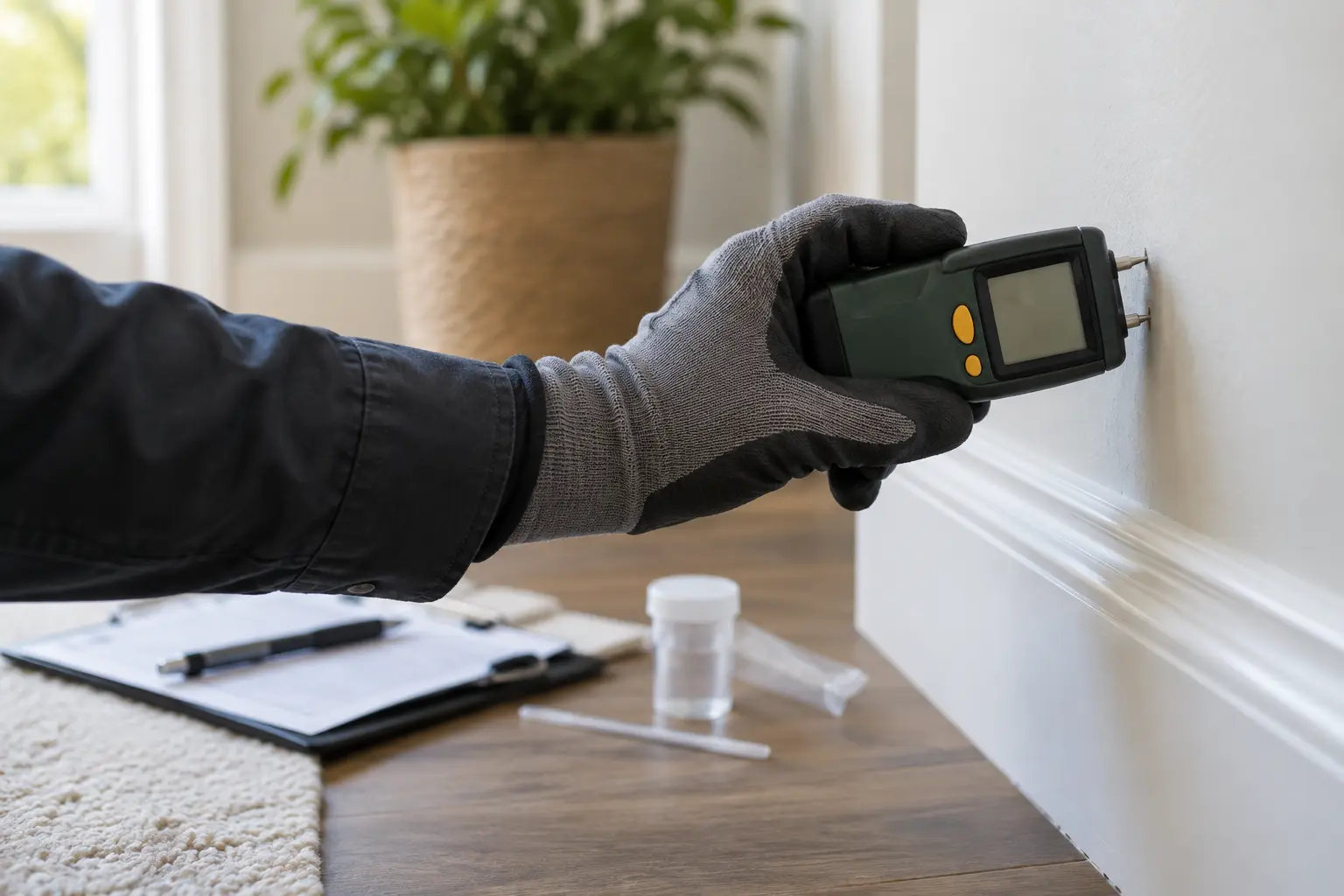
A mold inspection is a visual and moisture-focused walkthrough of the property. A mold professional looks for visible growth and moisture sources. Depending on the property and visible conditions, the evaluation may include moisture measurements and closer examination of areas where water intrusion is suspected.
Mold testing is a separate, more specific tool. According to the EPA, when mold is already visible, sampling is usually unnecessary — the priority is addressing the mold and the moisture source, not confirming what's already apparent. Sampling may be considered when an experienced professional has a defined reason for collecting it — for example, to answer a specific question about a property. Any sampling should be designed and interpreted by someone with relevant experience, since there are no federal standards for acceptable indoor mold or mold-spore concentrations to compare results against.
Mold Removal and Remediation Process
Mold remediation is the process of safely removing mold growth and addressing the moisture that allowed it to grow in the first place. The general process typically includes:
- 1
Assessment — Identifying the extent of the mold and the source of the moisture feeding it. Removing mold without correcting the moisture source generally leads to it returning.
- 2
Containment — Depending on the size, location, and conditions of the affected area, the work area may be sealed off to limit spores from spreading to unaffected parts of the property.
- 3
Removal — Cleaning or removing affected materials based on the material, its condition, and the remediation plan.
- 4
Drying and moisture correction — Addressing the underlying cause, whether that's a plumbing leak, poor ventilation, grading issues, or crawl-space humidity.
- 5
Review — Evaluating the cleaned area and the corrected moisture conditions. Any additional verification should depend on the project scope and remediation plan.
The exact scope of work varies by property and is determined during the evaluation.
Crawl-Space Mold and Moisture Considerations
For Anderson-area properties that have crawl-space foundations, the space beneath the building deserves particular attention when musty odors, damp materials, or standing water are present.
Warning signs of a crawl-space moisture problem include:
- A musty smell noticeable in the living space above
- Visible condensation on crawl-space piping, ductwork, or framing
- Standing water or damp soil after rain
- Sagging insulation or visible mold on floor joists
Appropriate moisture control isn't a one-size-fits-all fix — it depends on the crawl space's existing design, along with drainage, ground moisture, plumbing condition, air sealing, and humidity levels. Depending on what an evaluation finds, that might mean improved drainage, a vapor barrier, air sealing, or full encapsulation.
Residential and Commercial Mold Services
Mold and moisture concerns can affect properties of any age or type, and each situation is evaluated on its own conditions.
Residential
Residential properties in Anderson range from long-established neighborhoods to newer construction. Homeowners, landlords, and buyers or sellers navigating a real estate transaction often have somewhat different priorities, from long-term prevention to a well-documented resolution before closing.
Commercial
Commercial properties — offices, retail spaces, multi-unit buildings — bring their own considerations. Commercial projects may require additional planning to limit disruption to occupants, tenants or normal operations.
Anderson-Area Geographic Context
Anderson sits in Anderson County in the Upstate region of South Carolina, an area with a humid climate through much of the year. Lake Hartwell, a reservoir built and maintained by the U.S. Army Corps of Engineers, forms part of the county's western border and is one of the region's defining geographic features. Lake proximity by itself does not establish that a property has a moisture or mold problem. What actually matters for any individual property is a combination of factors: plumbing condition, drainage and grading, ventilation, HVAC operation, roof condition, and how the crawl space or foundation is managed.
Frequently Asked Questions
Is a mold inspection the same as mold testing?
No. An inspection is a visual, moisture-focused walkthrough to identify visible growth and moisture sources. Testing involves lab-analyzed air or surface samples and is generally considered when a professional has a specific reason for it — not as a routine step when mold is already visible.
What happens during mold remediation?
In general terms, remediation involves assessing the affected area, addressing containment as appropriate to the situation, cleaning or removing materials based on their condition, and correcting the moisture source that allowed the mold to grow. The specific approach is set during the evaluation.
What are the warning signs of a crawl-space moisture problem?
Common signs include a musty smell in the rooms above, visible condensation on pipes or framing, standing water or damp soil after rain, and sagging insulation. Any of these are worth having evaluated.
Does being near Lake Hartwell mean a home automatically has a moisture problem?
No. Lake proximity is part of the area's general geography and by itself does not establish that a property has a moisture or mold problem. That depends on the property itself — plumbing, drainage, ventilation, HVAC operation, roof condition, and crawl-space management.
When might mold testing be considered?
Testing may be considered when a qualified professional has a specific question that sampling could help answer. When mold is already visible, EPA guidance says sampling is usually unnecessary. There are no federal standards establishing an acceptable indoor concentration of mold or mold spores.
What information should I have ready when requesting an inspection?
It helps to know the general location of the concern (which room, or the crawl space), whether there's a musty smell versus visible growth, whether there's been a recent leak or water event, and whether the property is residential or commercial. A mold professional can evaluate these conditions during the property visit.
Request an Inspection
If you're noticing a musty smell, visible discoloration, or crawl-space dampness at an Anderson-area property, request an inspection to get started.